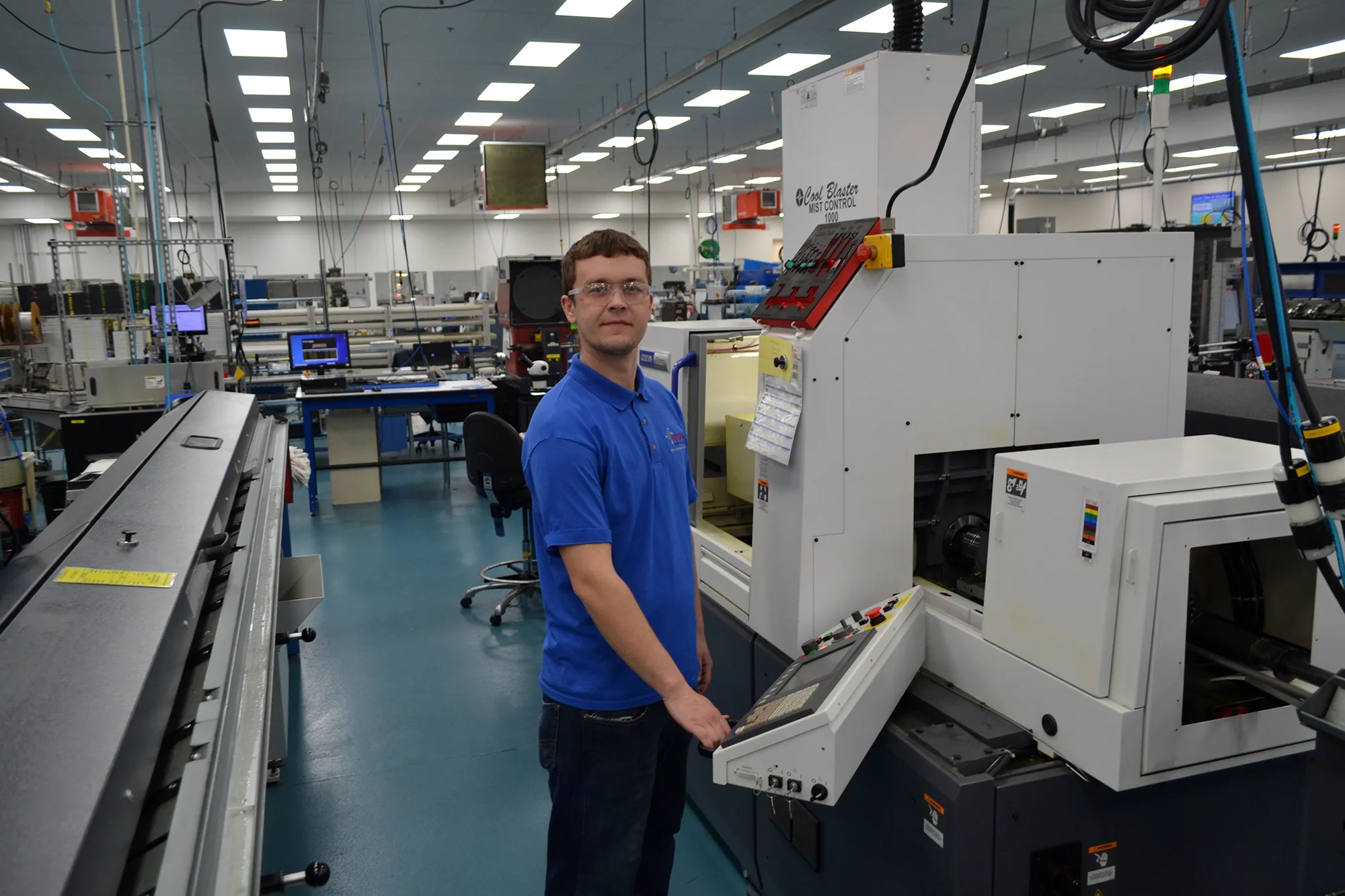
For Richard Gill, Swiss machining offered an ideal blend of craftsmanship and technology. As a Swiss machinist, he could work with his hands while leveraging the precision and power of computers. Even better, it was a well-paying, in-demand trade. So, in June 2022, Gill decided to pursue a challenging Swiss machining apprenticeship, which he completed in June 2025.
The Tegra Medical-sponsored apprenticeship required 4,500 hours of on-the-job training and 450 hours of online technical instruction. Gill, now a Journeyperson Swiss Machinist, says he’s glad he made the commitment.
“The computer control and programming of the machine interested me the most,” Gill said. “Also, I know Swiss machining is a highly valued position in the manufacturing and machining industry. With technology growing as it is, there will always be new things to learn.”
Swiss Machining: Old World Craftsmanship Meets High Tech
You’ve heard the expression, “Runs with the precision of a Swiss watch,” right?
As the name suggests, Swiss machining originated in 19th-century Switzerland to produce watch components. Since then, the technique has been adapted to modern manufacturing, especially in the medical device industry, where the need for small, precise parts continues to grow.
Companies like Tegra Medical use Swiss machining to produce surgical screws, orthopedic implants, and other highly detailed components critical to patient care.
For those unfamiliar, a Swiss machine is essentially a high-tech lathe—one that uses computer numerical control (CNC) to perform turning and milling operations. Today’s CNC Swiss machines incorporate advanced automation and deliver exceptional efficiency, even when producing high volumes of components with tight tolerances. This level of precision is essential in meeting the strict regulatory standards of the medical device industry.
Day in the Life: The Pursuit of Precision
So, what’s a typical day like for a Swiss machinist? According to Gill, it’s all about the pursuit of precision and constant attention to detail.
“A Swiss machine operator typically runs the machine, makes offsets [position adjustments for precision machining] and changes tools,” he explained.
“You’re constantly checking the parts to make sure everything stays extremely accurate. If set up correctly, you can hold very small and precise tolerances. Then, if needed, you make the offsets or tool changes necessary to bring the part exactly in line with the blueprint and tolerances given.”
Earning, Learning, and Looking Ahead
Gill reflected on his experience with the apprenticeship program: “One of the big benefits is that while you’re at work, you’re learning and growing your skills. Every hour brings you closer to graduation, and you’re getting paid to learn.”
Looking ahead, Gill plans to grow with Tegra Medical while pursuing a degree in manufacturing engineering or another field within the industry. “I want to continue learning and honing my skills as a machinist,” he said.
Ken Nadeau, Apprenticeship Coordinator for Tegra Medical, notes that the apprenticeship credential, combined with an associate’s degree, makes you a very desirable candidate for that next opportunity.
“This could mean advancing to a technical lead, supervisory role or, through higher education, a member of the engineering group with Swiss manufacturing experience,” Nadeau elaborated. Gill recommends the Swiss machinist career path to anyone who wants a valuable, transferable skill. He also points to the Tegra Medical program’s advantage: completing a state-certified apprenticeship while earning a competitive wage and gaining meaningful, hands-on experience.
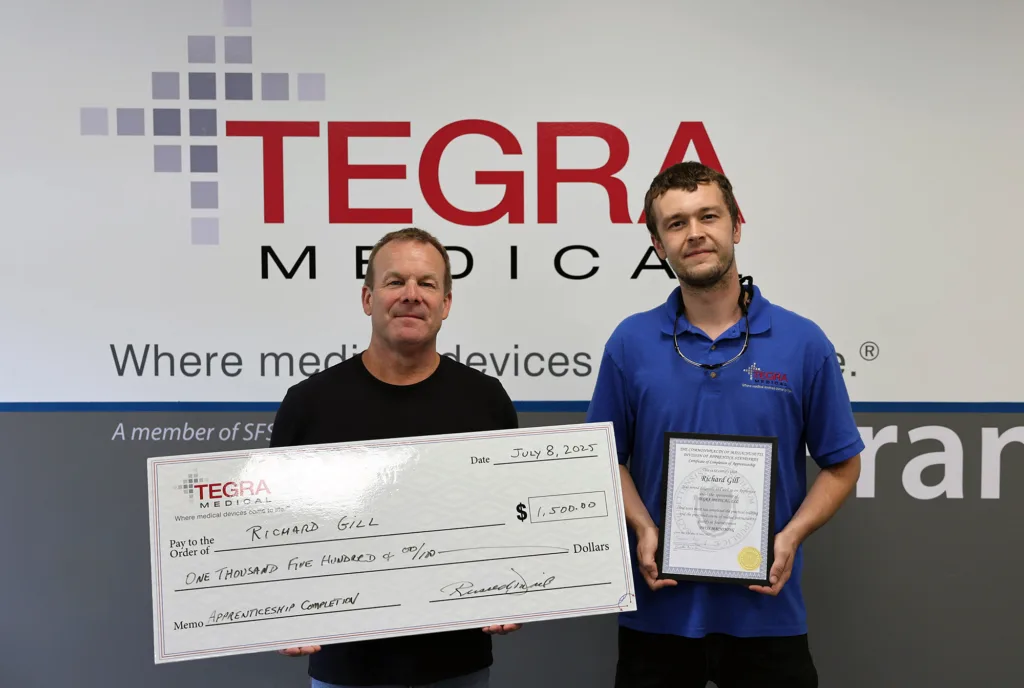
Pictured: Ken Nadeau presents Richard Gill with $1,500 check, recognizing completion of his apprenticeship program.